
Games are crossing borders faster than ever, with developers chasing audiences in markets that can make or break a title's success. Yet the journey from original script to localized version is full of traps—translations that read fine in isolation but collapse under real gameplay pressure. That's where Linguistic Quality Assurance (LQA) steps in as the final checkpoint before release. It catches the issues that slip past translation and basic QA, ensuring the game feels native rather than awkwardly imported.
The stakes are high. Poor localization doesn't just annoy players; it drives them away. Industry reports show that international markets account for a massive share of mobile gaming revenue—often the majority in many regions—and subpar language handling correlates with sharply higher early churn rates. When players encounter confusing instructions or culturally off-key dialogue, retention suffers quickly. LQA prevents that by verifying the translation in context, not just on paper.
The Most Common Language Bugs That Derail Immersion
Even experienced teams run into recurring problems. Here are some of the frequent offenders:
Contextual mismatches: A phrase that works literally in English can lose its meaning or turn unintentionally funny in another language. Quest instructions that seem clear in isolation might lead players straight into a dead end when the nuance disappears. This is one of the hardest to spot without in-game playthroughs.
Text truncation and overflow: Longer translations push buttons, menus, and HUD elements out of shape. German or Russian strings often expand 30% or more compared to English, and without flexible UI design, text gets cut off or overlaps.
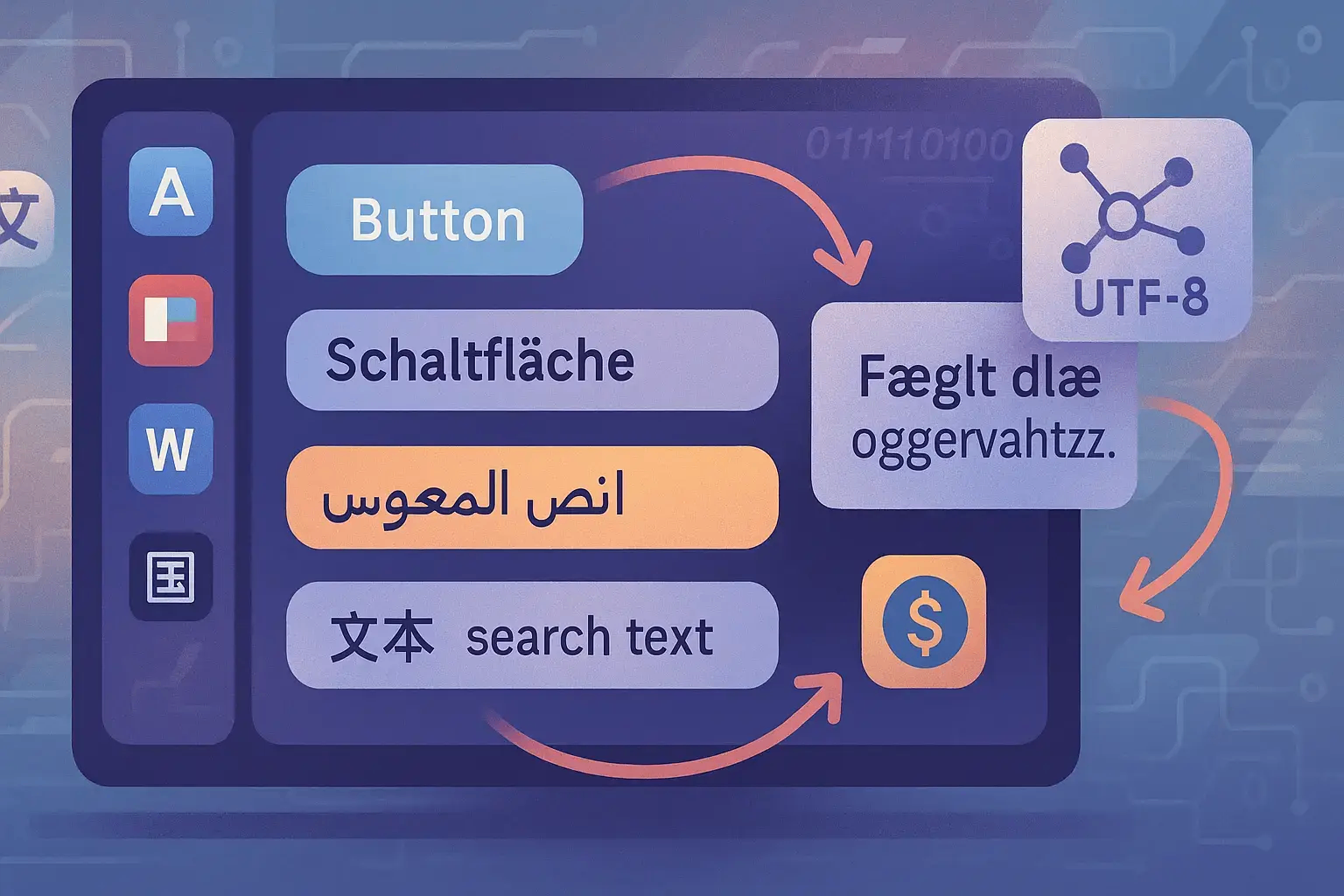
Missing font support (mojibake or "tofu" characters): Special characters turn into blank squares when the game lacks proper font coverage, especially in Asian or Eastern European languages. Players see gibberish instead of text, breaking immersion instantly.
Inconsistent terminology and cultural missteps: The same item or ability might have three different names across menus, or a joke lands as offensive rather than clever. Hardcoded strings, locale-specific formatting errors (dates, currency), and unadapted idioms compound these issues.
These aren't theoretical. Classic examples include rushed translations in older titles that became memes (think garbled dialogue in Fatal Fury Special) or modern cases where quest directions mangled player progress in iconic franchises like The Legend of Zelda.
A Practical Game LQA Testing Checklist
Effective LQA follows a structured approach. Here's a streamlined checklist drawn from industry practice:
Contextual review: Play key scenes, dialogues, and quests to confirm translations match visuals, audio, and mechanics.
Cultural sensitivity scan: Flag idioms, references, or humor that could confuse or offend; involve native experts.
UI/text integrity check: Verify no truncation, overflow, or font issues; test text fit across devices.
Functional language testing: Run through tutorials, missions, and edge cases to ensure instructions allow smooth progression.
Media sync verification: Check subtitle timing, lip-sync, and localized audio/video coherence.
Edge-case coverage: Test on target hardware/OS; include bilingual comparisons to avoid over- or under-localization.
Metrics tracking: Aim for low linguistic bug rates (ideally under 1%) and loop feedback to developers.
Starting LQA mid-development rather than at the end makes fixes cheaper and allows for smoother updates later.
Remote LQA Services: Advantages and Trade-offs
Remote LQA has become standard for many studios. It taps into global native speakers without relocation costs, offering flexibility and access to specialized talent in multiple time zones. This can lower expenses and speed up coverage for dozens of languages.
However, remote setups sometimes face coordination challenges—time differences can delay responses, and without hands-on play sessions, subtle visual or feel issues might take longer to surface. Streamlined processes and clear bug-reporting tools help mitigate this, but poorly managed remote workflows can inflate costs by 15-20% due to extended timelines.
The best results come from teams that combine remote scale with strong communication and iterative rounds.
Getting It Right the Last Time
LQA isn't an add-on; it's the safeguard that turns a solid translation into an experience players trust. By addressing these final details, developers protect their investment and build loyalty across borders. For teams serious about global reach, partnering with a provider that brings deep experience makes the difference. Artlangs Translation, with over 20 years in language services, supports more than 230 languages through a network of 20,000+ certified translators in long-term partnerships. Their focus on game localization, video and short-drama subtitling, multilingual dubbing for shorts and audiobooks, plus data annotation and transcription, has powered numerous successful titles and media projects—delivering results that resonate with players worldwide. When the last line of defense matters most, that expertise counts.





