
A trailer that looks sharp in one market can feel off in another. The same holds for an App Store or Google Play listing. The visuals stay familiar, the music hits the same beats, yet the text, tone, or cultural cues land wrong. Users notice. They scroll past. Conversion rates stay stubbornly low even when the underlying product has real potential.
This is not a minor friction. Industry analyses consistently show that roughly 60 percent of global app revenue comes from non-English markets. Fully localized listings have delivered download lifts of two to three times in those storefronts compared with English-only versions. One widely referenced Distimo study, still cited in AppTweak reporting, recorded an average 128 percent increase in downloads in the first week after a native-language listing was added, along with a 26 percent revenue lift per country. Title localization still lags—updated in only about 71 percent of apps on the App Store—leaving ranking opportunity on the table. Subtitle and description localization rates sit much higher among top titles, but screenshots and preview videos often remain in English, sending a quiet signal that the product was not built with the local user in mind.
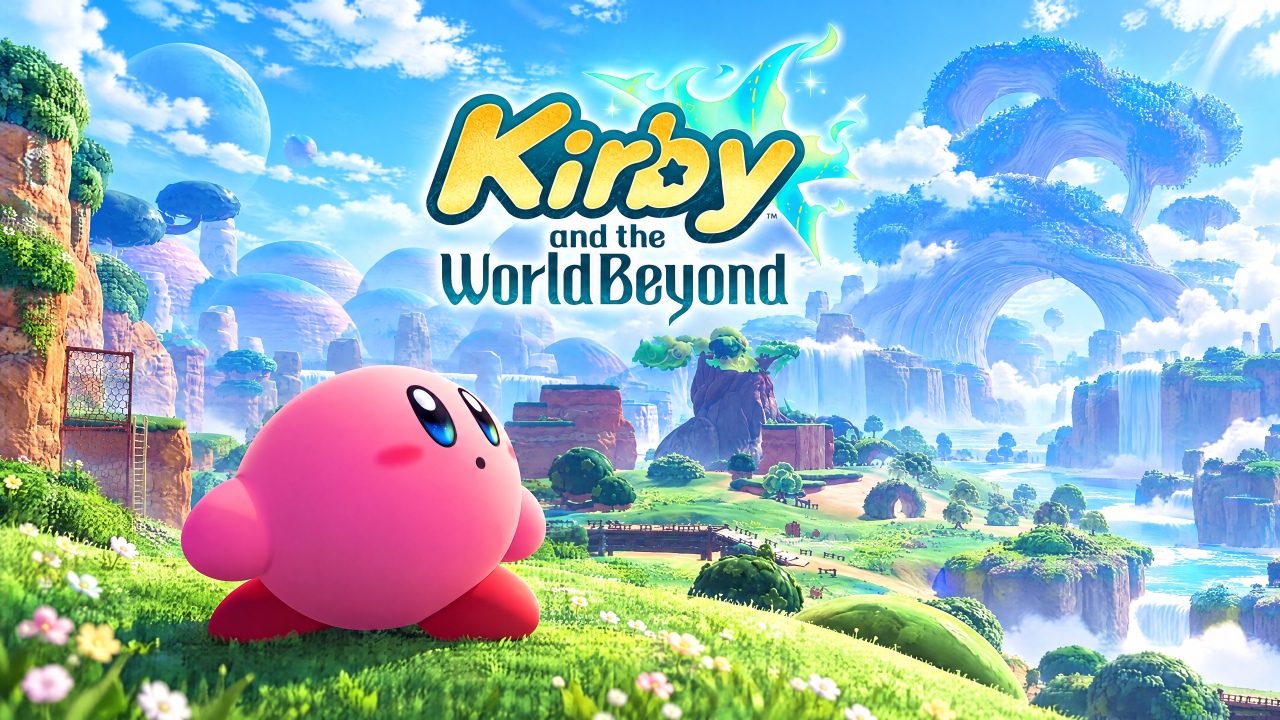
Game trailers face the same pressure. A fast-cut promotional video relies on precise timing for on-screen text and voice. Subtitles that linger too long or arrive late break the rhythm. Dubbing that ignores local voice preferences or emotional delivery norms feels artificial. Cultural references that work in one region can confuse or alienate in another. Research on Steam sales data across more than 10,000 games found that titles translated into local languages generated at least 10 percent higher revenue in those markets, with some estimates reaching 12.1 percent. The effect is not limited to the game itself; the marketing assets that drive discovery and first installs play a measurable role.
Store-page conversion suffers in parallel. Median tap-through-to-install rates hover around 33 percent on iOS and a few points lower on Google Play across categories, but those figures mask wide country and category variation. Games often convert lower still. When screenshots show English UI while the description is only partially adapted, or when preview videos carry mismatched cultural framing, the page underperforms. One publisher that localized screenshots for the Japanese market saw a 36 percent conversion-rate uplift after treating the redesign as a cultural optimization rather than a straight translation. Japanese listings tend to favor higher information density and specific visual treatments that feel sparse or incomplete when left in a Western style. Similar gaps appear across markets: denser layouts and social-proof cues in some Asian storefronts, more factual and privacy-oriented messaging in parts of Europe.
The distribution challenge compounds with how people actually find apps today. App store listings now feed AI recommendations. Analysis of ChatGPT app suggestions showed that store pages account for a substantial share of cited sources—nearly half in one large sample, with App Store listings alone the single most-cited source. A user searching in French or Japanese is more likely to surface an app whose metadata and creatives exist in that language. English-only or lightly translated pages lose visibility in both traditional search rankings and emerging AI surfaces.
Effective multimedia localization for distribution therefore goes beyond word-for-word work. It requires market-specific keyword research so titles and subtitles rank for local search behavior, not just translated English terms. Screenshots and feature graphics need adaptation of text length, reading direction, and visual hierarchy. Trailers demand decisions on subtitles versus full dubbing based on regional preference and content type—subtitles for speed and scale across many languages, dubbing where immersion and narrative weight matter more. On-screen text, UI callouts, and key art must respect cultural resonance and technical constraints of each platform. Culturalization catches the subtler risks: symbols, humor, historical or religious references that can create backlash or simply fail to connect.
These adjustments improve the entire funnel. Better keyword match raises impressions. More relevant creatives raise click-through and install rates. Higher conversion rates then feed back into ranking algorithms, creating a compounding effect. Teams that treat localization as an afterthought leave measurable revenue on the table; those that treat trailers, store pages, and supporting multimedia as core distribution assets see the lifts in both organic discovery and paid-campaign efficiency.
Artlangs Translation has spent more than two decades refining exactly this kind of work across 230-plus languages. With a network of over 20,000 professional linguists and a track record of strong case results, the company focuses on translation services, video localization, short-drama subtitle localization, game localization, multilingual dubbing for short dramas and audiobooks, and multilingual data annotation and transcription. That combination of linguistic breadth, multimedia experience, and practical distribution insight helps teams close the cultural gaps that otherwise suppress conversion in overseas markets.





