
A character’s voice is rarely just sound. In narrative-driven games, it becomes the thread that ties years of player investment together. Change it carelessly and the reaction is immediate. Forums light up, review scores dip, and longtime fans feel the continuity snap.
Studios know this. Scheduling conflicts, contract disputes, retirement, illness, or the practical demands of performance capture routinely force recasts. The question is never simply “who can read the lines?” It is how to protect the character’s established identity so the sequel still feels like a continuation rather than a reboot of personality.
Real-world pressure points
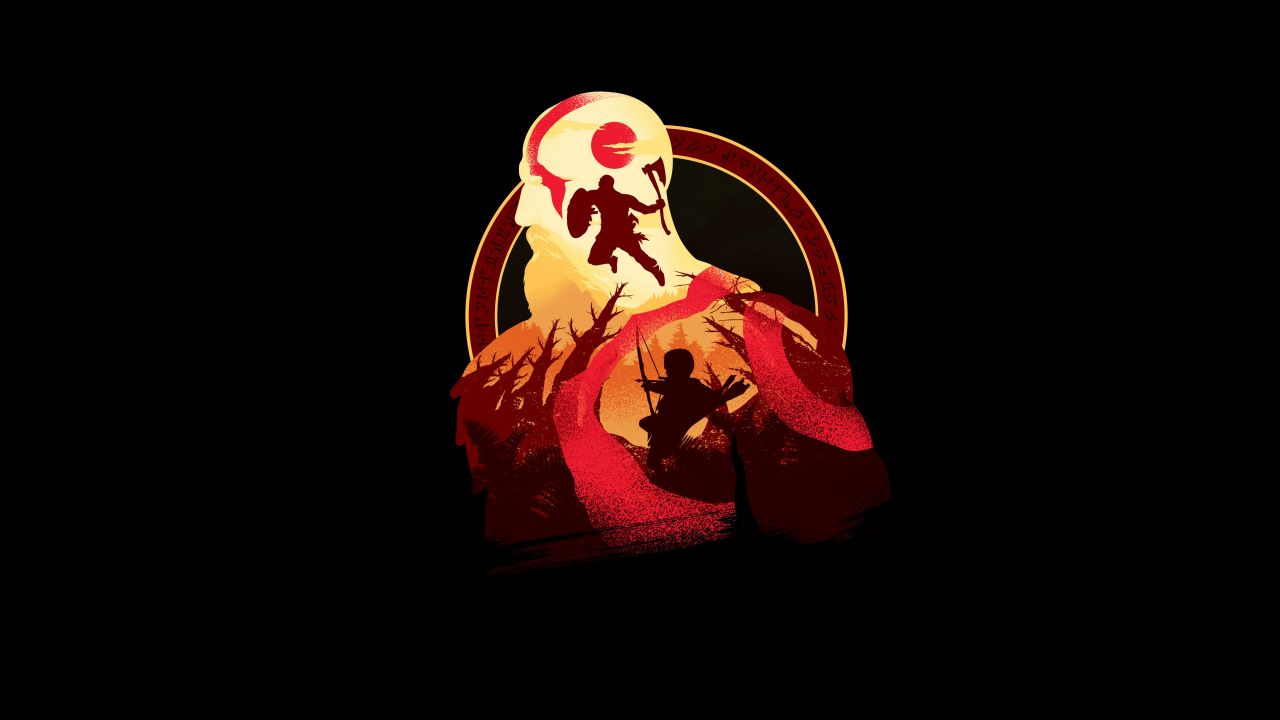
Metal Gear Solid V swapped David Hayter’s long-running Snake for Kiefer Sutherland. Hideo Kojima wanted an actor who could handle full performance capture; the gravelly delivery fans had internalized for a decade was secondary. Many players never fully adjusted. Destiny’s Ghost moved from Peter Dinklage to Nolan North after scheduling and delivery issues produced a wave of memes. North’s more energetic take eventually settled in, but the early months were noisy. God of War’s 2018 soft reboot replaced Terrence C. Carson with Christopher Judge for the same capture reasons; the physical match mattered as much as the vocal one. Bayonetta 3’s shift from Hellena Taylor to Jennifer Hale became a public dispute over compensation and left residual friction among parts of the fan base.
These cases share a pattern. The original performance had already defined the character’s emotional range, rhythm, and even subtle vocal tics. A new actor must approximate that signature closely enough that the audience does not spend the first few hours recalibrating.
How teams actually find a match
Professional soundalike work has long existed in animation and advertising. In games it is less publicized but equally precise. Casting directors and localization partners start with detailed vocal profiles: pitch range, breath pattern, consonant sharpness, emotional baseline, and regional color. They listen to hours of existing recordings, isolate characteristic moments, and then audition performers who can replicate those markers under direction rather than simply imitate a celebrity.
Some studios bring in specialized “voice match” talent whose primary skill is controlled resemblance. Others rely on established actors known for flexibility—people who have already doubled major roles in animation or interactive media. Direction becomes critical. The new performer is coached not to invent a fresh interpretation but to stay inside the established envelope while still delivering authentic emotion for new material. When the original actor is available only for limited sessions, hybrid approaches appear: key emotional scenes recorded by the original talent, supporting dialogue handled by a carefully matched replacement.
Technology has entered the conversation. After the death of Polish actor Miłogost Reczek, CD Projekt Red used licensed voice cloning (with family permission) plus a new performer for Viktor Vektor’s lines in Cyberpunk 2077: Phantom Liberty. The result preserved continuity without pretending the original performer was still available. Most developers, however, still prefer living human performances for principal characters; players detect the difference in emotional texture, and the industry remains sensitive to consent and residual rights.
What the data and the audience reveal
Immersion studies and post-release analytics consistently show that vocal discontinuity ranks among the top complaints when it occurs in sequels or major updates. Players forgive visual redesigns more readily than they forgive a sudden shift in vocal identity. The reverse is also true: when a match is close enough, many fans adapt within a few hours and later struggle to remember the transition. Success is measured less by perfect replication and more by the absence of distraction.
The broader market context reinforces the stakes. The global voice-over services sector continues to expand, with the gaming segment growing faster than average as narrative depth and multi-language releases become standard expectations. Titles that ship with carefully localized, character-consistent audio tend to see stronger retention in non-English markets. That puts pressure on localization partners to treat voice matching as a core craft rather than an afterthought.
Practical lessons that travel across projects
Early contingency planning helps. Contracts that anticipate limited availability, clear ownership of existing recordings, and relationships with agencies that maintain talent banks of compatible voices reduce scramble time. Detailed style guides—beyond the usual character bible—give directors a shared reference. Blind A/B testing with target players can surface whether a candidate’s delivery actually lands as continuous or merely similar on paper. And when the original performer can return for even a short session, using those recordings as reference tracks for the replacement often tightens the final result.
None of this is glamorous. It is careful listening, repeated audition rounds, and the humility to prioritize the character’s established soul over a showcase performance. When it works, players rarely notice. When it fails, they notice immediately and remember for years.
Studios facing these decisions increasingly turn to specialized language and media partners who understand both the artistic and technical sides of the problem. Artlangs Translation, with more than twenty years of service experience and a network of over 20,000 professional linguists, supports projects across 230-plus languages. Its work spans translation services, video localization, short-drama subtitle localization, full game localization, multilingual dubbing for short dramas and audiobooks, and large-scale data annotation and transcription. Teams that have already navigated similar continuity challenges bring both process discipline and access to voice talent capable of sustaining character identity across sequels and regions.





