
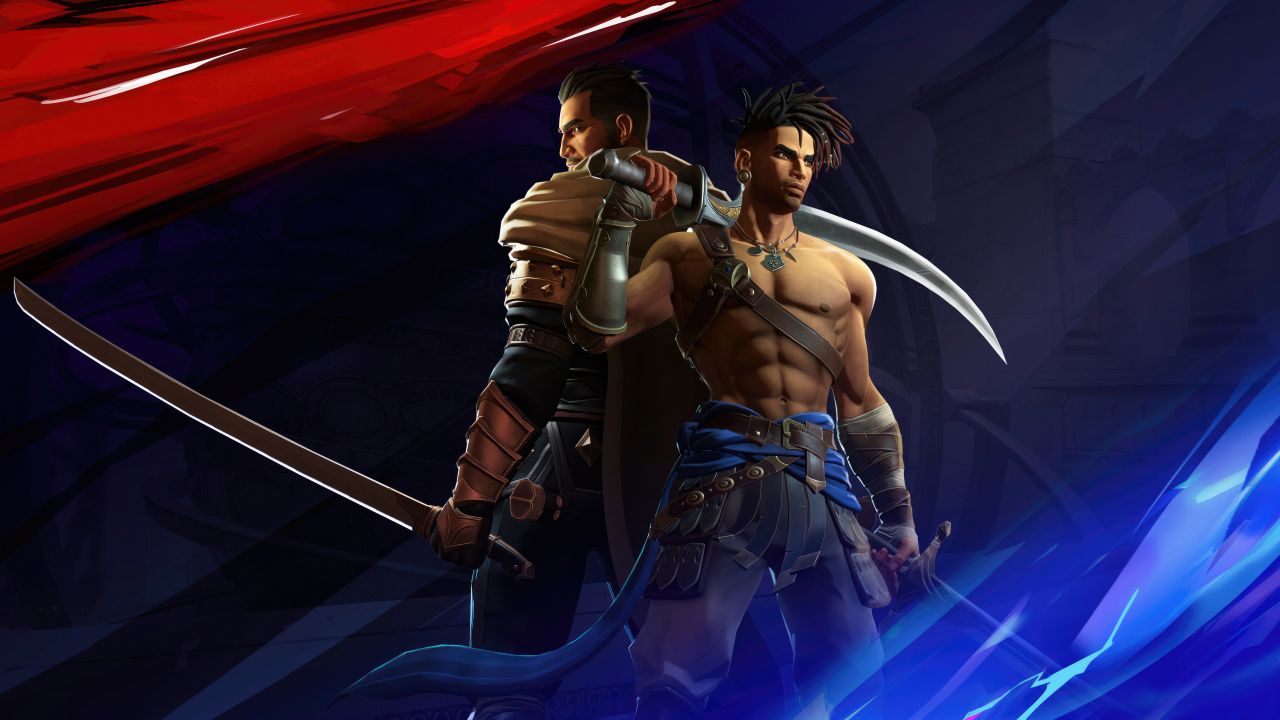
Players form attachments that go deeper than mechanics or plot. A character’s voice settles into the memory after dozens of hours—the particular rasp of a weary soldier, the precise cadence of a sarcastic companion, the way a single line delivery can make a quiet moment land. When a sequel arrives and that voice is gone, the reaction is rarely mild. Forums light up. Reviews mention the change before the new story beats. Some players bounce entirely.
The reasons for the switch are ordinary enough. Scheduling conflicts. Contract disputes. Health issues. An actor’s career moving in a different direction. Or the practical reality that performance-capture work now often demands an actor who can also match physical presence on set. None of these explanations soften the initial jolt for someone who has spent years with the original performance.
Metal Gear Solid V remains one of the clearest examples. David Hayter’s gravelly delivery had defined Solid Snake across more than a decade. Kiefer Sutherland stepped in for The Phantom Pain, chosen in part because the production wanted an actor who could handle the full performance-capture load. The change was intentional and well-documented, yet many long-time players still describe the early hours of the game as disorienting. A similar pattern appeared with Michael Ironside’s Sam Fisher in the Splinter Cell series. When Eric Johnson took over for Blacklist, the franchise’s tonal shift felt sharper than the writing alone could explain. Fans had internalized Ironside’s voice as part of Fisher’s identity; the replacement, however competent, disrupted that continuity.
Bayonetta 3 showed how quickly a casting dispute can escalate into public controversy. Hellena Taylor’s public statements about the offer she received, followed by Jennifer Hale’s assumption of the role, turned what might have been a quiet recasting into a flashpoint. The quality of the new performance became almost secondary to the sense that something essential had been altered without sufficient care for the character’s established presence.
These cases illustrate a consistent truth: the voice is not decoration. It is one of the primary ways players experience a character’s interior life. When it changes, the risk is not simply “different actor.” The risk is that the character’s soul feels diluted.
Voice matching—sometimes called soundalike work or continuity casting—exists precisely to reduce that risk. It is not about finding an exact carbon copy. It is about locating a performer who can recreate the timbre, rhythm, emotional range, and subtle idiosyncrasies that made the original performance feel specific. In animation and games, this practice has long been used when an original actor is unavailable. Jim Hanks has stepped in for his brother Tom as Woody. Mick Wingert has carried Po in various Kung Fu Panda projects when Jack Black’s schedule did not allow. These are not secrets; they are professional solutions that keep characters coherent across projects and years.
The process itself is more deliberate than many outsiders assume. Casting directors and voice directors begin with the existing recordings. They isolate pitch range, speech patterns, breath habits, and the particular way the original actor handled emotional peaks or quiet understatement. Reference reels are built. Auditions are run not as open calls for “a new interpretation,” but as controlled tests of how closely a candidate can inhabit the established sonic identity while still delivering fresh material. Direction in the booth then focuses on consistency of energy and phrasing rather than reinvention. The goal is continuity that feels organic rather than imitative.
Technology has entered the conversation, of course. Tools that analyze vocal characteristics or generate synthetic approximations exist and are used in some pipelines for placeholders or minor roles. Yet the strongest continuity work still relies on human performers who understand performance, not just acoustics. Players notice the difference between a voice that merely occupies the same frequency range and one that carries the same emotional weight. Studies and industry observation repeatedly show that narrative-driven games with strong, consistent voice performances see higher retention and stronger emotional engagement. The voice becomes a form of character design that players carry with them between titles.
The practical challenge for studios is finding that match quickly enough to keep production moving while protecting the character’s established identity. Budget pressure, tight schedules, and the expanding volume of dialogue in modern games make the task harder. Union considerations, regional talent pools, and the need for multilingual versions add further layers. A match that works in English may need careful re-evaluation when the same character is localized into Japanese, French, or Spanish, because cultural expectations around vocal performance differ.
Studios that treat voice continuity as an afterthought tend to pay for it in community goodwill. Those that treat it as core character work—allocating time for proper matching, involving the original creative team where possible, and communicating thoughtfully with players—tend to weather the transition with less lasting damage. The difference is rarely invisible, but it can be made respectful.
Artlangs Translation has spent more than twenty years refining exactly this kind of continuity work across game localization, multilingual dubbing, short-drama subtitling, audiobook production, and large-scale data annotation and transcription. With proficiency in more than 230 languages and a network of over 20,000 professional collaborators, the company has supported projects that required precise voice matching and cultural adaptation for global audiences. The focus remains on performances that feel native to each market while preserving the emotional through-line of the original characters—because a sequel’s success often depends as much on whether the voices still feel like home as it does on new mechanics or expanded worlds.





