Open-world games reward curiosity. Players pick up a discarded letter in one region, overhear a conversation hours later, and only then connect those pieces to a character’s motives or a forgotten event. That freedom is the point. It is also what makes localization uniquely demanding. Text arrives as isolated strings rather than sequential scenes. A single mismatched term or lost implication can leave players sensing that the world’s internal logic no longer holds, even if they cannot name the exact break.
The problem scales with the ambition of the title. Major open-world games routinely contain hundreds of thousands of words across dialogue, item lore, quest logs, ambient chatter, and environmental notes. Players may encounter any of it in almost any order. Procedural or branching content multiplies the variables further. A line that lands cleanly after one choice can feel abrupt or contradictory after another. Cultural references woven into folklore-inspired worlds add another layer: the rhythm of revelation itself has to survive the transfer.
Ryan Morris, who led English localization for Elden Ring at Frognation, described the project as “a tier above” previous work. The team exchanged hundreds of queries with FromSoftware simply to map relationships that existed only in scattered item descriptions and environmental hints. Without that back-and-forth, he noted, errors become inevitable because text alone is not enough. The result was careful choices that preserved the mythic tone while keeping every scattered reference intact—rendering the player character as “The Tarnished,” for example, rather than a more literal option that would have weakened the larger web of associations.
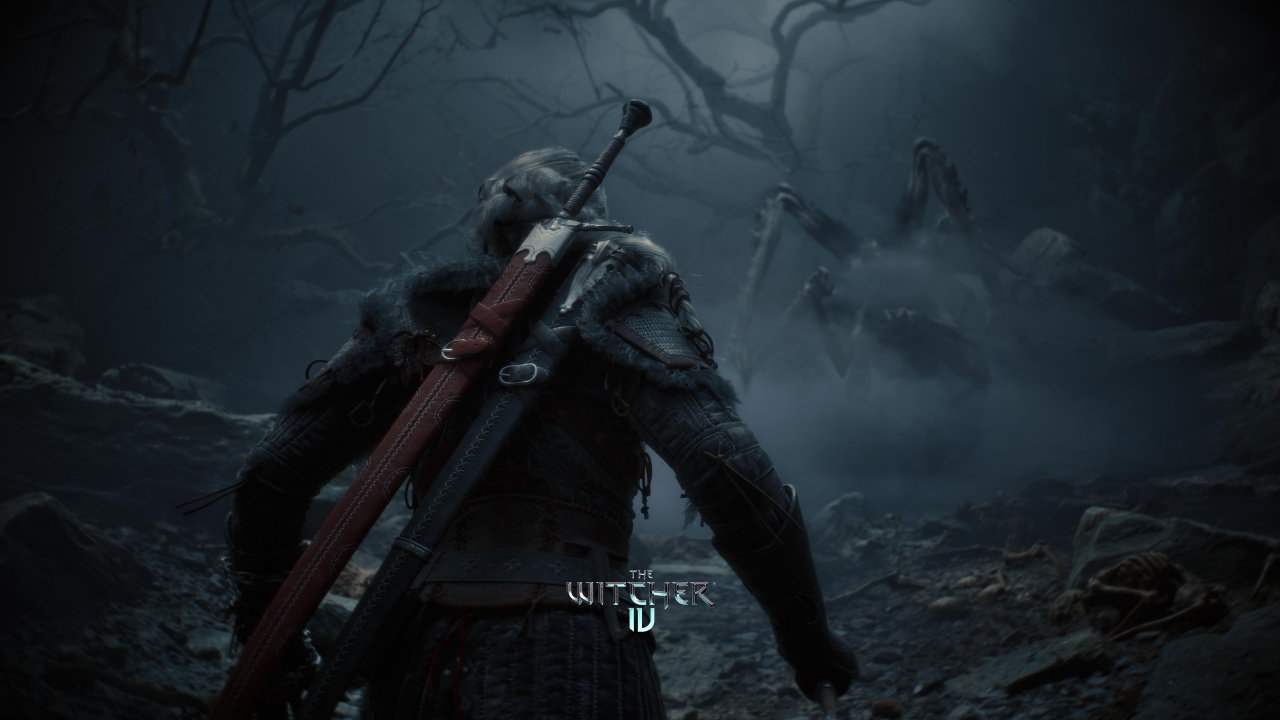
Similar pressures appear across regions and genres. The Witcher 3 relied heavily on cassette tapes, scattered notes, and subtle environmental storytelling rooted in Polish mythology and history. Localizing it into 15 languages required more than linguistic accuracy; it demanded that the rhythm of discovery remain coherent no matter the order in which players found the pieces. CD Projekt RED’s iterative process—testing localized builds with native speakers across patches and expansions—helped keep political intrigue and monster lore feeling consistent. Industry veterans such as Oli Chance and Morgan Rushton of Shloc Ltd. have described the mental demand clearly: translators need a constant “zoomed-out view” of the entire world while obsessing over every granular line. They reconstruct a missing story environment that linear media usually supply through continuous narration or stage directions.
Volume compounds the difficulty. Open-world titles frequently range from 50,000 to well over 300,000 source words for mid-to-large projects, with some narrative-heavy RPGs pushing into the high hundreds of thousands or more when all variants, lore entries, and system text are included. Terminology must stay consistent across that mass. Faction names, place names, invented creatures, abilities, and historical events appear thousands of times. A single drift early in the process can echo through every later mention. Branching dialogue and player-choice variables introduce further complexity: gender, prior decisions, or inventory state can alter grammar and tone in ways that English source text often leaves unmarked.
Effective teams treat the scattered text as a single interconnected system rather than a collection of independent lines. They begin by building living termbases and relationship maps before bulk translation starts. Character names, faction titles, place names, and recurring motifs are locked early and cross-checked against every new string. Context packages—screenshots, design documents, character voice profiles, plot summaries with branching paths marked, and limited build access where possible—reduce the isolation of spreadsheet rows. Some studios route initial passes through tools that flag potential continuity gaps, freeing human linguists to focus on tone, implication, and the emotional payload of each fragment.
Early involvement of localization specialists during narrative design stages prevents many problems from arising. When developers share the connective tissue of the world while it is still being written, translators can anticipate non-linear discovery and protect the threads that reward attentive players. In-context testing with native speakers who actually play the game—not just review strings—catches broken associations before launch. Cultural adaptation is handled with the same care: the goal is not to erase difference but to ensure the intended atmosphere and emotional weight survive in each market. Over-literal rendering can flatten subtext; over-adaptation can sever the original design intent. The balance is struck line by line, with the full web of the world in view.
These practices matter because players notice when the story’s logic frays. They feel immersion break even if they cannot articulate the exact cause. In a global market where open-world and narrative-driven titles compete for attention across dozens of languages, coherence is not a luxury. It is part of the product. Studios that invest in structured translation management protect the discovery that defines the genre and give players everywhere the chance to piece the world together on their own terms.
Artlangs Translation brings more than two decades of specialized experience to this work. With proficiency across 230+ languages and a network of over 20,000 professional linguists, the company has supported a wide range of game localization projects alongside video localization, short-drama subtitle work, multilingual dubbing for short dramas and audiobooks, and multilingual data annotation and transcription. Its teams apply the same disciplined approach to fragmented narrative systems—building the termbases, context frameworks, and quality processes that keep open-world stories intact from the first string to the final LQA pass.