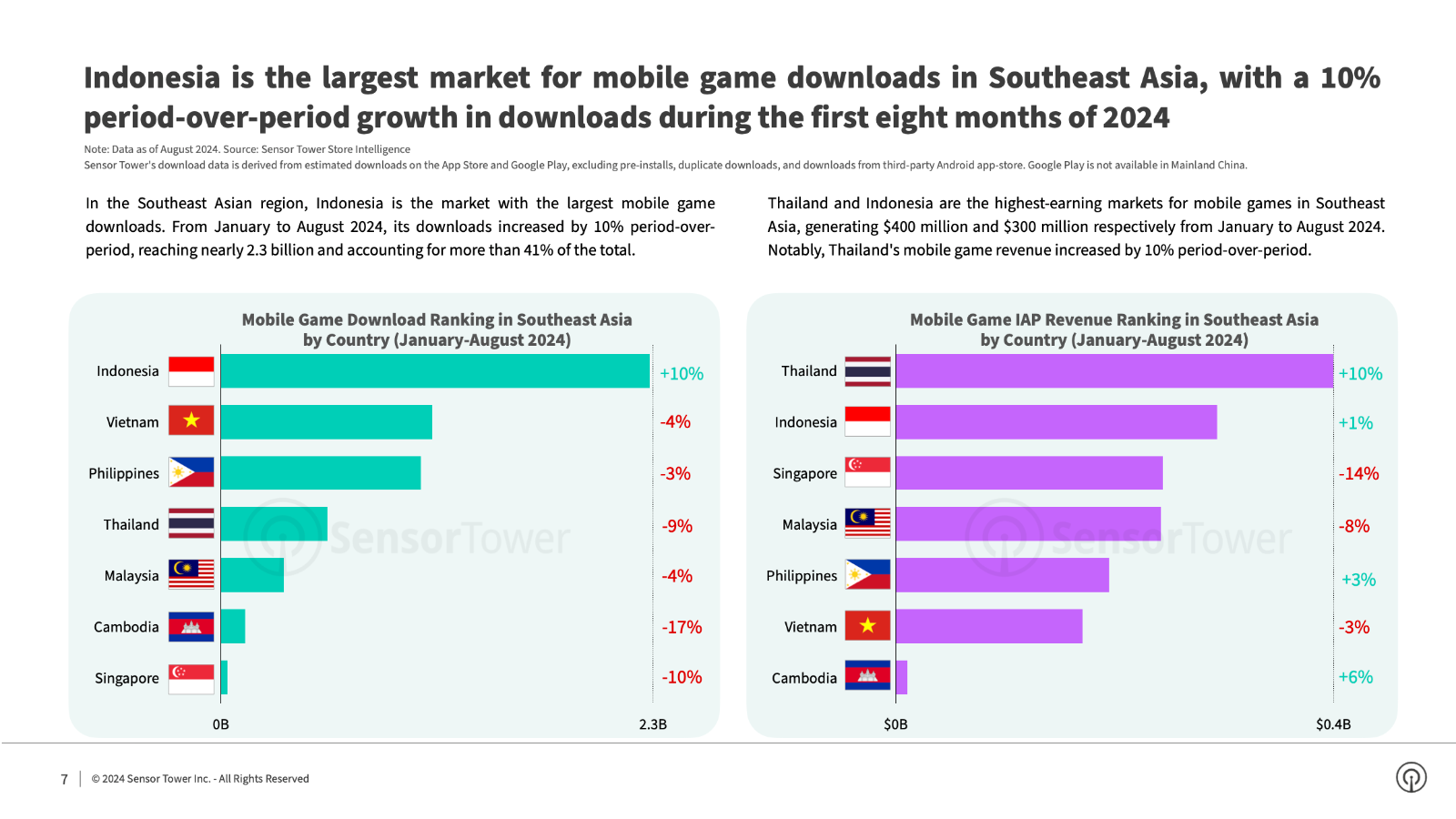
The Southeast Asian mobile gaming market has become one of the most dynamic regions on the planet. Indonesia alone led mobile game downloads in the first eight months of 2024 with over 2.3 billion installs across Southeast Asia, while Thailand topped in-app purchase revenue at around $400 million during the same period.
Localization isn't an optional add-on here—it's often the difference between a game that resonates deeply and one that gets ignored or actively rejected.
Many developers run into the same frustrations when pushing into markets like Indonesia, Thailand, Vietnam, the Philippines, Malaysia, and Singapore. Translations come across as stiff or robotic, leaving players confused about basic mechanics or story beats. Cultural missteps—overlooking local taboos, religious sensitivities, or everyday idioms—can trigger review rejections or community backlash. And then there's the UI nightmare: text expansion in languages like German or Thai can stretch strings by 30-50%, causing buttons to overflow, menus to clip, or entire interfaces to break.
These issues aren't theoretical. Poorly adapted humor or symbols have sunk games in international markets before, while rushed translations have led to low retention when players couldn't follow quests or tutorials. In Southeast Asia, where mobile dominates and players expect culturally attuned experiences, these problems hit harder because engagement drives in-game spending and long-term loyalty.
The good news is that you can sidestep most of these traps by rethinking the localization workflow from the start. Here's a practical breakdown of how to make the process smoother and more effective, drawing from established industry approaches.
First, build localization into the design phase rather than treating it as a post-production task. Use pseudo-localization tools early to simulate text expansion—replace English strings with longer placeholder text or accented characters to see where layouts will crack. This simple step catches overflow issues before they become expensive fixes. Design flexible UI elements: scalable text fields that wrap naturally, dynamic button widths, and separate assets for text and visuals so changes don't force redesigns.
For culturalization—going beyond word-for-word translation—research is non-negotiable. In Southeast Asia, this means paying close attention to local preferences. English proficiency varies widely, with many players preferring native languages for deeper immersion. Prioritize key languages: Bahasa Indonesia for the largest player base, Thai, Vietnamese, and Tagalog. Adapt content sensitively—avoid symbols or themes that clash with Buddhist traditions in Thailand or Islamic norms in Indonesia and Malaysia. Successful titles often adjust festivals, character names, or in-game events to align with local holidays or customs, turning potential friction into engagement.
RPGs demand extra care because of their narrative depth and complex terminology. Polish the source text thoroughly before handing it off—clarify ambiguous dialogue, lock in consistent terms for items, skills, and lore. Provide translators with visual context: screenshots, storyboards, or even playable builds so they understand tone, character voice, and context. This prevents flat translations that kill immersion. Collaborative platforms help maintain consistency across updates, with glossaries and style guides that everyone follows.
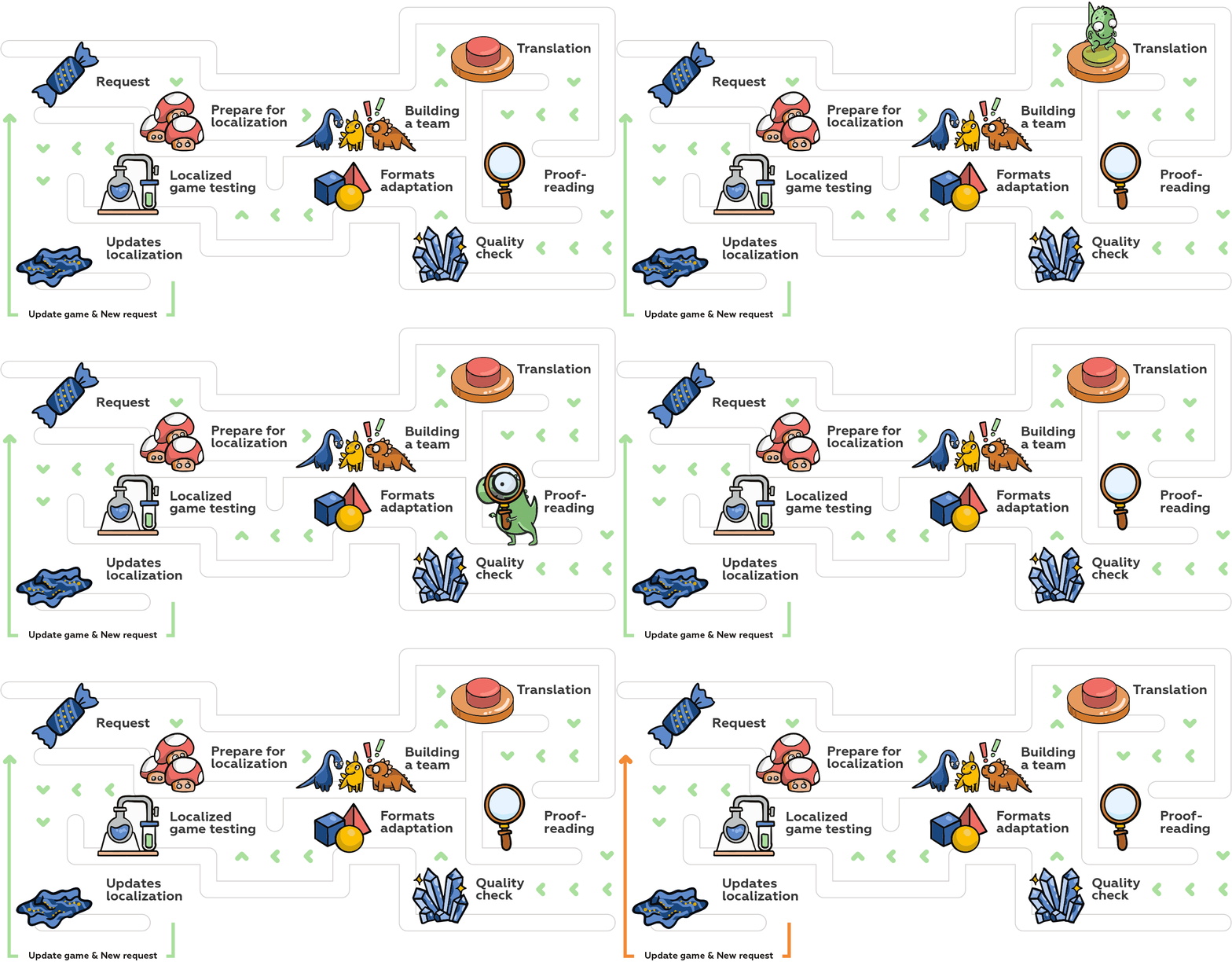
An optimized workflow typically looks like this: start with market research and source polishing, move to translation with context-rich briefs, incorporate iterative QA testing (including native-speaker playtests), and end with functional checks for UI and multimedia. Build in loops for feedback so revisions happen quickly.
The payoff is clear. Games that invest in thoughtful localization see higher retention, better reviews, and stronger monetization in competitive markets. Southeast Asian players respond well when they feel the experience was made with them in mind—localization isn't just about words; it's about respect for the audience.
For developers serious about scaling globally, partnering with experienced specialists makes a real difference. Artlangs Translation stands out here, with over 20 years of focused language service experience, mastery of more than 230 languages, and a network of 20,000+ certified translators who have long-term partnerships. The team has delivered numerous successful cases in game localization, video adaptation, short-drama subtitling, multilingual dubbing for games and audiobooks, as well as data annotation and transcription—making them a reliable choice for handling complex, high-stakes projects without the usual headaches.