
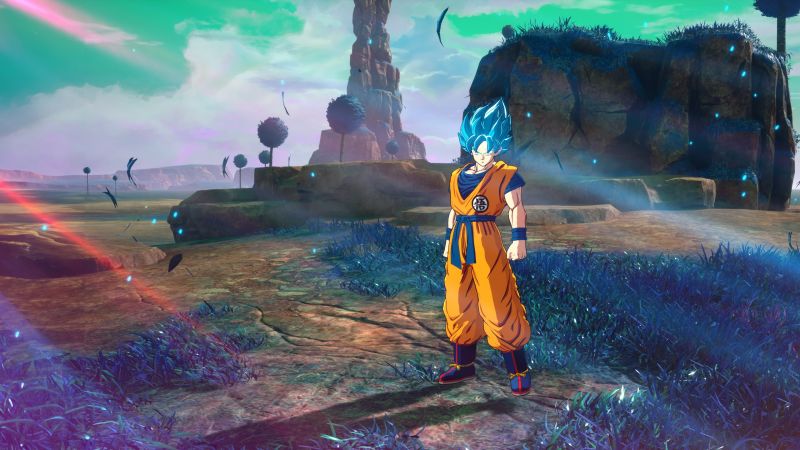
Picture a tense boss fight in your indie roguelike. The English line reads “Stand your ground.” In the German build it becomes something that wraps awkwardly across two lines and clips the health bar. Or worse: the Russian version of a cheeky NPC quip lands as a flat, literal phrase that kills the joke entirely. Players don’t laugh with you—they laugh at you. These aren’t rare one-offs. They’re the direct result of “blind translation”: handing linguists raw string files with zero screenshots, no gameplay footage, and no context about timing, tone, or UI placement.
Indie developers chasing global markets know the stakes. Newzoo’s latest data puts the 2025 global games market at $188.8 billion with 3.6 billion players—most of them outside English-speaking territories. Yet many small teams still treat localization as an afterthought: ship the English build, run the text through a translator, and pray. The result? Memes like “All your base are belong to us” or “Conglaturation!!!” that started as genuine translation trainwrecks and somehow became internet lore. Funny for retro games. Career-limiting for a fresh title trying to hit Steam wishlists in ten languages.
Translation Gets the Words Right. LQA Makes Sure They Work.
Here’s the distinction that saves launches: translation converts meaning from one language to another. LQA (Language Quality Assurance) is the in-game reality check that verifies those words actually fit, feel native, and don’t break anything.
A translator might nail the dictionary definition of a quest item. An LQA tester playing the localized build will catch that the same phrase now overlaps the “Equip” button on a 5.5-inch Android screen, or that the sarcastic tone reads as sincere in Korean and kills the humor. LQA isn’t proofreading—it’s functional, visual, and cultural testing inside the actual game environment. It catches truncated text, misaligned subtitles, inconsistent terminology, and those subtle context failures that make players close the app and never come back.
The UI Overflow Problem (and Why German and Russian Are the Usual Suspects)
Longer target languages are the silent killers of clean interfaces. “Settings” becomes “Einstellungen” in German—nearly twice as long. Russian compounds and declensions stretch strings even further. Without proper planning, buttons truncate, menus scroll unexpectedly, or entire HUD elements vanish.
I’ve seen solo devs post frantic Reddit threads after their first German localization: perfectly balanced English UI suddenly looks amateurish, with text bleeding off-screen or crushing the art. The fix isn’t “make everything bigger.” It’s building flexibility from day one—flexible containers, dynamic font scaling, and, crucially, testing with real expanded text before final art lock.
Building a Visual Testing Environment That Actually Works
The single biggest lever against blind-translation disasters is giving your team (and your linguists) eyes on the game. Here’s how experienced studios do it without burning weeks of manual regression:
Pseudo-localization early and often. Replace real strings with expanded placeholders—add 30-50% length, accented characters, and brackets around variables. Run it in-engine. You’ll instantly spot hard-coded strings, layout breaks, and encoding issues before a single real translation lands. Unity, Unreal, and modern engines have built-in support; Android Studio even ships pseudolocales for mobile.
Automated screenshot pipelines. Tools like Gridly paired with a simple Unity script can capture in-game strings on every language build and push them straight to reviewers. One studio (Rovio) cut LQA time by four times this way—testers went from hundreds to a thousand strings per day without losing context.
Native-speaker LQA in the actual build. Provide testers with the full game, debug cheats, style guides, and reference screenshots. They play, flag, and suggest fixes in real time. This catches everything pseudo-localization misses: cultural tone, gender/plural agreement quirks, and those “it sounded fine in the spreadsheet” moments.
For mobile apps specifically, a solid LQA checklist looks like this (pulled from what actually ships without drama):
Linguistic accuracy and natural flow in context
UI fit: no truncation, proper line breaks, button/label scaling
Functional checks: do placeholders still work? Any crashes on special characters?
Cultural appropriateness: no unintended offense or lost humor
Consistency: same term used the same way across menus, tutorials, and dialogue
Platform compliance: Google Play/Apple guidelines on locale-specific formatting
Subtitle timing and readability on different device sizes
Accessibility: high-contrast text, proper RTL support if needed
Regression: new strings didn’t break previously approved sections
Run this after every content drop and you’ll sleep easier the night before launch.
Automated LQA Tools: Helpful, But Not a Full Replacement
AI has made huge strides. Platforms like Phrase Auto LQA, Smartling’s LQA Suite, and Lokalise AI can score thousands of strings in minutes, flag obvious errors, and even suggest fixes—cutting processing time by up to 99% and costs by 65% in some workflows. They’re excellent for first-pass consistency checks and vendor benchmarking.
But nuance still needs humans. A machine might approve a grammatically perfect line that sounds robotic in a heartfelt NPC monologue. The smartest teams layer automation for scale and native LQA for soul. The result is faster iteration without sacrificing the immersion indie games live or die by.
The Bottom Line for Indie Teams
Manual regression testing eats weekends and delays launches. Blind translation creates memes instead of memorable experiences. Proper LQA—visual, contextual, and iterative—turns localization from a cost center into a competitive edge. When your German players don’t see chopped-off buttons and your Japanese audience actually gets the joke, retention and reviews follow.
For studios that want this handled without hiring a full localization department, the right partner changes everything. At Artlangs Translation, we’ve spent more than 20 years perfecting exactly these workflows across 230+ languages. With a network of over 20,000 professional collaborators, we specialize in game localization, video localization, short-drama subtitle adaptation, multi-language dubbing for dramas and audiobooks, and the multilingual data annotation and transcription that keeps every build consistent. Whether you’re shipping your first mobile title or scaling to 20+ markets, our end-to-end LQA, visual testing pipelines, and native-speaker expertise ensure your game feels native everywhere—without the last-minute panic or accidental comedy. Your players (and your launch schedule) will thank you.





