Mid-size Western RPGs routinely clock between 500,000 and 2 million words of player-facing text—dialogue trees, item descriptions, environmental logs, lore entries, loading-screen asides. That’s the equivalent of thirty to sixty feature-film scripts. Japanese narrative-heavy titles often layer voice-line constraints on top. A single project can swallow the textual output of an entire season of prestige television, then demand the same emotional precision in a dozen languages while the source keeps shifting under new patches and DLC.
Players notice when the seams show. A 2024 Game Localization Coalition survey found 67 percent of developers reporting player-facing quality issues tied to dialogue localization—character voice drift, tone mismatches, cultural references that land flat. RPGs and story-driven adventures accounted for the largest share. One inconsistent term for a faction, a weapon, or a recurring character’s nickname can unravel hours of carefully built immersion. Branching logic multiplies the risk: a choice that alters later dialogue must still feel coherent months after the original writers moved on. And in games-as-a-service models, content drops every six to eight weeks. The old waterfall approach—finish the game, then translate—collapses under that cadence.
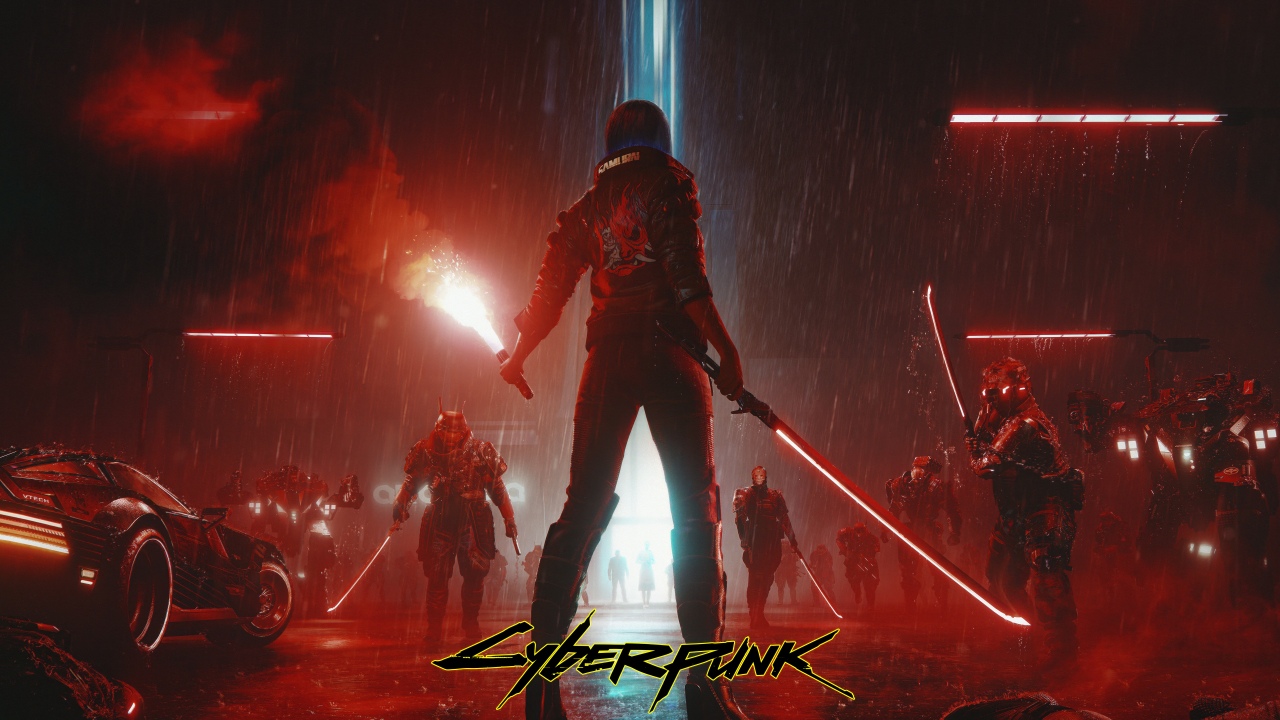
CD Projekt Red’s numbers for Cyberpunk 2077 remain instructive. Roughly 1.1 million words went into 19 languages; nearly 82,000 lines were recorded by voice actors in 11 of them. More than 2,450 people contributed to localization alone—over 45 percent of the total headcount on the project. Internal localization staff, external translators and editors, LQA testers, directors, engineers, and nearly two thousand voice actors. When Phantom Liberty added another 450,000 words and 25,000 voice lines, the same machinery had to absorb the load without fracturing continuity. The studio treated English adaptation as parallel to the primary Polish writing from the earliest stages, which kept the localization team inside the creative loop rather than chasing after it.
Terminology sits at the center of that continuity. A shared, living termbase—character names with agreed transliteration or retention rules, ability titles, location labels, system concepts, UI strings that recur across contexts—acts as the single source of truth. Glossaries built before bulk translation begins prevent the costly retroactive consistency passes that otherwise appear once multiple linguists have already worked on different batches. Context notes matter as much as the approved equivalents: the same English word can mean currency in one scene and a resource type in another. Tools that surface the termbase inside CAT environments and flag deviations reduce the human error that compounds across hundreds of thousands of strings. Updates to the termbase must propagate quickly when new content arrives; otherwise the next patch reintroduces the very inconsistencies the first pass eliminated.
GungHo’s recent comments on the Trails series underscore the limits of pure automation. The publisher stated it has no plans to rely on AI for localization because the series’ vast lore, recurring cast, and distinct speaking styles still require human judgment. Terminology has to remain consistent across multiple entries spanning years. Small details of voice and register cannot be reliably recovered once they drift. Industry observers note that while machine translation and AI-assisted pre-screening can accelerate throughput—especially for high-volume, lower-creativity strings—the narrative core of epic games continues to demand experienced linguists who understand both the source world and the target audience’s cultural expectations.
Version velocity adds another layer of pressure. Live-service titles ship updates on fixed cycles; localized versions must arrive in lockstep across languages or players in one market experience the new content while others wait. Agile pipelines, early LQA involvement, and parallel workflows between narrative designers, translators, and testers become non-negotiable. Fragmented spreadsheets and email chains create exactly the data loss and version conflicts that surface as untranslated journal entries or mismatched item names at launch. Centralized string management with clear ownership, context screenshots, and speaker attribution for every dialogue line reduces that friction.
The commercial stakes are clear. Global gaming revenue sits in the region of $200 billion, with multi-language releases now standard for major titles. The localization services segment itself has grown into a multi-billion-dollar market, driven by the expectation that players outside English-speaking territories receive an experience that feels native rather than merely comprehensible. Studios that treat localization as an afterthought pay for it in review-bombing, refunds, and lost goodwill. Those that invest in disciplined project management, rigorous terminology governance, and human oversight for the story-critical material protect the emotional contract they make with players.
Artlangs Translation has spent more than twenty years refining exactly these processes. With a network of over 20,000 professional linguists covering more than 230 languages, the company has handled large-scale game narratives alongside video localization, short-drama subtitles, multilingual dubbing for short dramas and audiobooks, and data annotation and transcription work. The accumulated case experience shows that volume, branching complexity, and rapid iteration are manageable when terminology is treated as living infrastructure and narrative consistency is never delegated solely to machines. For teams facing the next million-word epic, that combination of scale and specialized focus remains one of the more reliable ways to keep the story coherent no matter which language the player chooses.