
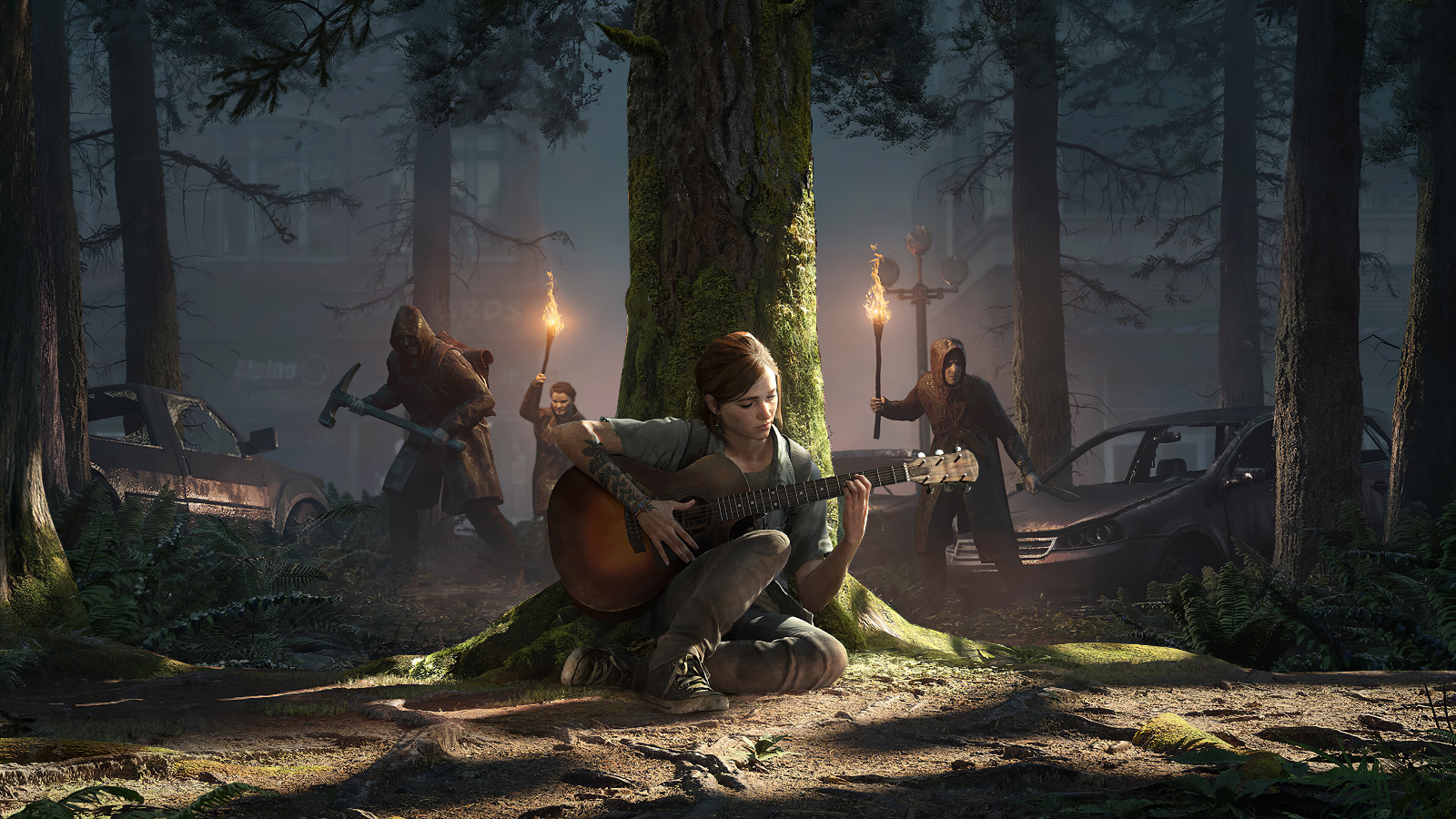
When Ellie confronts her trauma in The Last of Us Part II, the performance isn’t just words on screen—it’s a raw, trembling delivery that makes players pause and feel the weight of every breath. Ashley Johnson’s voice cracks in exactly the right places, carrying years of grief and rage in a single line. Moments like that don’t happen by accident; they come from an actor who’s lived the character through multiple takes, guided by a director who knows when to push for more vulnerability or pull back for restraint.
 Game:The Last of Us
That level of emotional authenticity is why voice acting remains central to narrative-driven games. Players consistently report stronger connections to stories when characters feel real. A 2024 YouGov survey found that only about a quarter of gamers would support replacing human actors with AI even if it sped up development and added more content—suggesting most prioritize performance over convenience. In story-heavy titles, where dialogue drives empathy and investment, a flat or synthetic delivery can break immersion entirely.
AI voice tools have made rapid strides, and studios are experimenting with them more openly. In 2025, Arc Raiders drew scrutiny for using generative AI to produce certain voice lines, echoing earlier backlash around The Finals. The appeal is straightforward: AI can generate lines quickly, scale to hundreds of variants, and handle multilingual versions without scheduling international sessions. Industry estimates suggest AI dubbing can cut costs by 60–86%, with some reports citing up to 70% savings for global localization.
Yet the trade-off shows up most clearly in central narrative moments. AI excels at consistent tone and clean audio, but it often misses the subtle human imperfections—hesitations, breath patterns, the slight waver in a voice under stress—that signal genuine feeling. Players frequently describe AI performances as “serviceable but soulless,” lacking the spark that turns a good line into a memorable one. Research on human versus synthetic voices in storytelling consistently shows advantages for real actors: better recall, higher engagement, and stronger mental imagery, often requiring less cognitive effort from listeners. In games, where emotional payoff relies on that connection, the difference can mean the line between a scene that lands and one that feels mechanical.
Cost-benefit analysis reveals a more balanced picture than headlines suggest. Professional game voice sessions typically run $200–$350 per hour, with most roles completed in two- to four-hour blocks. Experienced actors deliver efficiently when prepared, often nailing takes faster than iterative AI tweaks. While AI lowers direct talent fees dramatically, projects still need directors, sound engineers, and editors to integrate lines, fix timing, and ensure quality. The savings are real for filler dialogue or procedural content, but for protagonists or key cutscenes, the emotional cost of a less compelling performance can outweigh the financial gain—especially in titles where player retention hinges on story investment.
The audition process for human talent follows a structured, collaborative path. Directors post breakdowns with character descriptions, age range, accent, and emotional arc. Actors submit custom reads—usually three to five short scenes—showcasing versatility. Top candidates record paid test sessions so teams can compare chemistry and direction response. Live feedback in the booth often uncovers unexpected nuances: a director’s note to “lean into the anger but keep it contained” can transform a line from generic to heartbreaking.
For multilingual releases, the role of a skilled voice director becomes even more critical. They handle casting across languages, ensuring accents feel natural and culturally appropriate, and oversee sessions to maintain tone consistency. Finding native talent for smaller markets can be challenging—communication lags, time zones, and availability add complexity—but experienced directors maintain networks of proven actors and run virtual auditions to minimize travel.
Audio-visual sync in cutscenes demands precision. Scripts include timing notes, with tolerances often within 10–20 milliseconds for lip flaps. Engineers slice and stretch audio files to match animations without pitch distortion, while directors guide actors to hit exact beats. Early localization input prevents mismatches that require expensive re-records.
Teams facing recurring issues—emotionally flat lines, inconsistent audio quality, or logistical headaches with international casting—often turn to specialists who bridge these gaps. ArtLangs Translation draws on more than 20 years of focused language services, expertise in over 230 languages, and long-term partnerships with 20,000+ certified translators and voice professionals. Their work covers game localization, multi-language voice over, video dubbing, short-form content, and precise data annotation, delivering performances that feel authentic and culturally resonant. In an era of rapid tech advances, that human-centered expertise remains the key to narratives that truly resonate and keep players coming back.





