Indie developers pour heart into crafting worlds that pull players in—rich backstories, quirky NPCs, protagonists with distinct flaws and fire. Yet when it comes time to share those stories across languages, something often gets lost. A once-snappy line turns flat. A sarcastic rogue starts sounding like a textbook. Players notice. They might keep playing, but the magic fades, and that emotional hook slips away.
The pain is real for smaller teams: stiff dialogue that strips away personality, or translations that feel culturally off and yank gamers out of the flow. In an industry where retention hinges on how deeply someone connects with the experience, getting the words right isn't a nice-to-have. It's what lets your game breathe in new markets.
Why Literal Translation Falls Short in Games
Games aren't novels or films. Dialogue doesn't just convey information—it shapes rhythm, reveals character through speech patterns, and fuels emotional beats during gameplay. A gruff warrior's curt grunts, a witty sidekick's rapid-fire banter, or a mysterious mentor's layered metaphors all build the "feel" of the world.
When translators stick too close to the source without adapting for natural flow, the results can jar. Classic pitfalls include awkward phrasing that disrupts voice acting timing, humor that lands flat because cultural references don't translate, or character voices that blur together. One infamous early example is the mangled English in Zero Wing, where lines like "All your base are belong to us" became memes precisely because they shattered any sense of serious immersion.
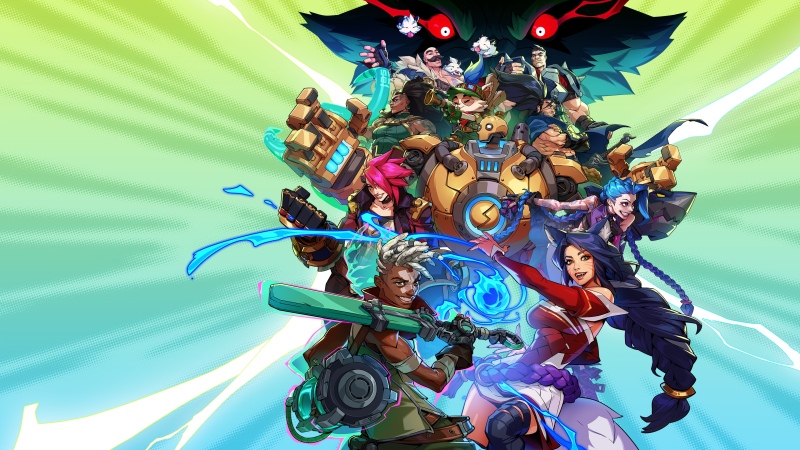
Research backs this up. Studies on player reception show that poor localization—especially in dialogue—can weaken sensory and narrative immersion. In one qualitative look at League of Legends' Greek version, participants pointed to "awkward and unnatural" voice acting and dialogue as reasons they switched back to English, noting it lacked the original's gravitas and pulled them out of concentration. Voice performance mattered hugely; without it matching the emotional weight, the experience felt diminished.
On the flip side, thoughtful adaptation preserves (and sometimes enhances) that pull. The Witcher 3's English-to-Chinese localization succeeded by going beyond word-for-word swaps. Translators exercised real agency—adjusting dialects, humor, and cultural nuances while coordinating with visuals and audio—to maintain narrative tension and emotional depth. Players reported the localized version still felt immersive, as if the story had been crafted with them in mind.
Final Fantasy localizations offer another lens: translators often practiced what experts call "transcreation"—creative rewriting within tight constraints of space, lip-sync, and gameplay timing. This freedom helped keep the epic scope and character quirks intact across cultures, contributing to the series' massive global success.
Practical Ways to Breathe Life into Translated Dialogue
So how do you actually do it? It starts with context. Give your translation team more than a spreadsheet of lines. Share character bios, relationship arcs, voice reference clips, and gameplay footage. This lets them capture idiosyncrasies—like a character's habit of trailing off mid-sentence when nervous, or using regional slang that signals their background.
Style guides become essential here. Define speech patterns early: one hero might speak formally with archaic touches to hint at an ancient lineage, while another peppers talk with modern contractions and sarcasm. Consistent application prevents voices from flattening.
Then there's the creative layer. Humor often needs re-rooting in the target culture without losing the original intent. Cultural sensitivities around topics like folklore or social norms might call for subtle shifts. And for voiced games, factor in lip-sync and delivery—shorter or longer lines can force rewrites that still ring true emotionally.
Testing with native players is non-negotiable. What reads fine on paper might sound off when voiced or encountered mid-battle. Iterative feedback loops help refine until the dialogue feels native-born.
The payoff? Higher player retention and engagement. Quality localization doesn't just open doors—it makes players feel seen and invested, turning one-time downloads into loyal fans. With the global video game localization market projected to grow significantly (from around $2.55 billion in 2026 toward $5+ billion in the coming decade at a strong CAGR), teams that prioritize soulful adaptation stand to capture more of that expanding audience.
Bringing Expertise to Indie Projects
For indie studios balancing tight budgets and ambitious visions, partnering with specialists who understand both gaming culture and linguistic nuance makes all the difference. Companies like ArtLangs Translation have spent over 20 years honing this craft. They handle game script and dialogue translation with a network of more than 20,000 professional collaborators, covering 230+ languages. Their focus spans full game localization, video and short drama subtitle adaptation, multilingual voice-over and dubbing for games, short dramas, and audiobooks, plus data annotation and transcription services.
What sets them apart is the emphasis on immersion: not just accurate words, but dialogue that carries personality, timing that supports performance, and cultural layers that let players sink deeper into the story. They've supported numerous projects where character voices stayed vivid and worlds felt authentic, helping smaller developers reach global players without losing what made the original special.
If your indie title has characters worth caring about, the translation shouldn't be an afterthought. Done well, it doesn't just convert text—it infuses the script with new life, keeping that hard-won immersion alive no matter where players are. The right partner ensures your story travels, and your heroes still sound like themselves.
Ready to give your game's dialogue the voice it deserves? Exploring specialized localization early can turn potential friction into seamless connection.